
Hey all, Sam here.
Welcome back to Weekend Writer, the weekly series where I dive into creative writing in a few different ways. For the first Friday of the month, I use creativity generators to come up with prompts to spark ideas (and you can use those for writing or art, whatever sets your creative heart and mind free). Then on the last Friday of the month, I share snippets of what I’ve written over the month, and invite you to do the same. For the rest of the weeks I do a deep dive into some aspect of the craft of creative writing, whether that is diving into an essay, a lecture, a YouTube video, or a book on creative writing, or just a discussion of some aspect of creative writing.
Which is where we are this week, with another deep-dive into our current writing craft book, so let’s just go ahead and jump on in.
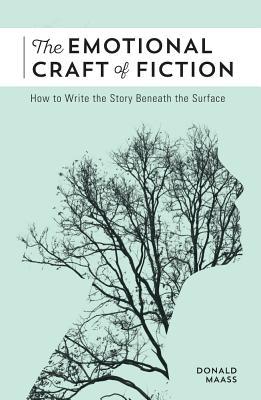
Engage Your Readers with Emotion
While writers might disagree over showing versus telling or plotting versus pantsing, none would argue If you want to write strong fiction, you must make your readers feel. The reader’s experience must be an emotional journey of its own, one as involving as your characters’ struggles, discoveries, and triumphs are for you.
That’s where The Emotional Craft of Fiction comes in. Veteran literary agent and expert fiction instructor Donald Maass shows you how to use story to provoke a visceral and emotional experience in readers. Topics covered
• emotional modes of writing
• beyond showing versus telling
• your story’s emotional world
• moral stakes
• connecting the inner and outer journeys
• plot as emotional opportunities
• invoking higher emotions, symbols, and emotional language
• cascading change
• story as emotional mirror
• positive spirit and magnanimous writing
• the hidden current that makes stories move
Readers can simply read a novel…or they can experience it. The Emotional Craft of Fiction shows you how to make that happen.
Chapter Four: Emotions, Meaning, and Arc
As we get started with this chapter, I feel like I have to say that I’m kind of still struggling with this book. While I’m able to pull some interesting quotes and such from the chapters, I’m not really connecting to the way it’s all being presented. For being a book on Emotional Craft, the main feelings I’m getting are frustration and annoyance.
I honestly don’t know if I’ll continue doing the deep-dives for this book next month. I might just finish reading it on my own and then do a bonus post recapping the rest of the book.
Actually, I think for most of this post I’m just going to be highlighting various quotes that jumped out at me, so let’s get into that.
Plot happens outside but story happens inside. Readers won’t get the true story, though, unless you put it on the page–both the big meaning in small events and the overlooked implications of large plot turns.
Page 59
This was a quote I just needed to make note of, because it very much made me think of how I handle the overall character arc for myself when I play Dungeons & Dragons. Because of the nature of how a story is told and shared at the table, we don’t see a lot of the internal moments for the characters. So I write character journals, and sometimes I end up writing short stories diving deeper into scenes that feel important, just to have a more full understanding of the thoughts and feelings going on with the characters.
While in D&D there are people who mostly focus on leveling up their character in a mechanical way, looking at what skills and feats and multi-classing options will optimize their character for greater damage output or better durability or whatever, there are also people who dive deep into the character and choose their level ups based on what makes sense for the character based on their story arc.
I like my character to be good at whatever they’ve been built to be good at, but I also want any increases to abilities or choosing of feats to make sense based on what the character is going through…and the journaling (which also gives me an excuse for even more note-taking) and the short stories are all a part of understanding the character.
Pages 61-62 have a book excerpt, as does pages 63-64, and pages 65-66.
Dry information is only dry when it doesn’t mean anything to anyone. What gives information emotional effect is not the facts that it conveys, but the personal significance it holds for someone who understands it.
Page 62
I like this one, because as a reader the information does sink in more when it has some sort of relevance and significance to the scene and to the characters. We pick up on the details more if the characters also find it to be important. So then it makes sense that as a writer we need to pay attention to how we present the information and ground the details into something that has some heftier weight and emotional importance. This is something I will definitely keep in mind going forward in my writing journey.
Perhaps the greatest challenge in writing fiction is making ordinary domestic tasks matter enough to read. Have you ever followed a character through a day and thought, Do we really need to see all of this? Do you sometimes skim stuff and wish authors or editors had deleted it?
Other authors, though, can crawl through a day and make every moment matter. Their characters comment, ponder, question, and turn over everything that happens to them as if every second of life is a diamond and everything said or heard has facets that demand examination.
Page 65
I know when I care about the characters, when I’m invested in who they are and what’s going on with them, I can even enjoy those quiet mundane moments that seem like everyday tasks, and I can power through any seemingly dull info-dumps. I think that’s why emotional craft is something that intrigues me, because for me, if I care about the characters, then I can handle those dry information periods or those quiet moments when the characters can just sit there and recover and reflect.
The Emotional Mastery 8: The Meaning of Everything exercise is on Page 67.
As human beings we seek self-knowledge, wholeness, happiness, and love. We yearn to explain the inexplicable; to justify our existence; and to understand who we are, why we’re here, and what we’re supposed to do.
It’s a quest that never ends.
Pages 67-68
You may think you are telling your characters’ stories, but actually you are telling us ours. Unearth the significance of any moment for a character and you will reveal its universal value.
Page 68
These two quotes come from the three paragraphs after the Emotional Mastery exercise, and I just really liked them. But I don’t feel like me blathering on about them will really add any more detail or relevance to them in connection to this chapter and/or this book.
This leads us to the next section, which is: Connecting the Inner and Outer Journey
Maass begins this section with roughly a page and a half about structure/construction of airports and other buildings, with beams and connectors and welds and all that. I say that, just so this next quote has a little more relevance.
What, you ask, does this have to do with writing fiction? The columns and beams of your novel are your protagonist’s twin journeys: outer and inner. The outer element, your plot, holds up the novel’s structure, like columns hold up a skyscraper. What lends a novel a feeling of depth, perspective, and movement across space, though, are its crosswise beams: your protagonist’s inner journey. To be both lightweight and strong, a novel needs both of those things working together.
Page 69
It is an interesting analogy for story writing, to look at each element as sort of a building block, and putting them all together builds the structure that is your story/novel. Likewise it makes sense that the outer journey is one type of building material and the inner journey is another type. After all, in construction they do use different materials to assemble a building.
So then, which building blocks do we focus on more when we’re writing? Obviously, we should focus on both outer and inner journeys in fairly equal measure, but I’m sure we all have one that we feel we are stronger with, and that’s probably the one we focus on more.
Interestingly enough, I think my focus on outer or inner varies based on the story, and more importantly, on the character telling the story.
Why, then, do I often feel that the inner journey is short, simplistic, or absent in manuscripts? It’s often because arc is less a journey than a jump. Many times it’s an event at the end that enacts a single change, reform, or realization. It’s more an add-on bonus than an ever-present quest and ongoing struggle.
Page 70
Well, Mr Maass, I’m assuming that’s because you’ve made it clear in this book that you think that most books out today are not great, have no emotional impact, and are just lacking in various ways.
And honestly, depending on the POV of a novel, we may not really see all of the internal journey of a character, so it seems like a jump of their arc because we aren’t watching the internal transformation. Okay, yes, that means the author probably could have done a better job of showcasing the internal changes of a character in external ways. But like, if your POV is one person, perhaps they aren’t seeing the gradual changes, and they certainly don’t see the internal transformation (unless they’re a telepath or an empath or something like that).
It’s odd, then, that on the page so many protagonists go through events of high drama and seem to change very little. What do they think about what’s happening? What do they feel? How do they feel about themselves? You may believe it’s better to leave that to the reader, but remember that readers don’t create–they react. Readers compare themselves to characters but there must be something to compare to.
Pages 70-71
Page 72-73 gives us yet another book excerpt. Emotional Mastery 9: Connecting the Inner and Outer Journey exercise is on page 73.
The next section within the chapter is: Tension Versus Energy
Human beings can be divided into two broad psychological categories: those who store tension and those who store energy. Those things may sound the same but they’re not. People who store tension turn inward. Those who store energy turn outward. The first group ponders, reflects, thinks, and feels. The latter group acts. One set of people likes to deal with life over a cup of tea with a splash of conversation. The other set prefers to go for a run or smack a ball with a stick.
Page 74
This is certainly an interesting way to think about people and to think about characters. Most of the time I’m of the former, turning inward, storing tension, pondering, reflecting, thinking, and feeling. And if I think about it, I think a lot of my characters tend to be that way as well, although there are several who store energy, turn outward, and act.
Characters dwell in a state of being. At any point in a story their selves can be defined. However, a state of being by itself is static; changing states are dynamic, and what is story if not change? As I have written elsewhere, what makes any given scene dynamic is not changing story circumstances, but changing characters.
So what kind of polarity swings are we talking about? Ones like these: self-awareness turning into self-confidence; goodness hardening into righteousness; the feeling of safety transforming into taking responsibility for it. Crafting polarity swings at times means shifting characters into high gear. [….]
Characters are the most interesting when they’re inconvenient.
Page 75
Honestly, this chapter has been the best of the book so far, with a few more quotes to ponder over and process going forward in my writing adventure…but I’m still very much debating about whether or not I want to keep deep-diving through the rest of the chapters in August, or if I want to switch off to a different book.
Pages 76-77 and 78-79 give us two book excerpts. Emotional Mastery 10: Shifting From Tension to Energy exercise is on Pages 79-80
In life, our moods swing. We contradict ourselves. We act out of character. We act out. Why then is it so hard to allow characters to do the same. We all swing between the polarities inside us. We second-guess ourselves, judge ourselves, have insight into ourselves, gain from hindsight, and make intuitive leaps. We also blunder ahead, ignore warnings, fail to think before speaking, dive in, reverse course, dance in the end zone, throw up our hands, throw punches when we shouldn’t, and walk away when we should hold firm and take a stand.
Polarity swings are steps in the emotional plot, so why not pace your novel accordingly?
Page 80
I think that when it comes to stories we like to see less swings and shifts and contradictions. It’s like we want heroes who are more assured and put together and less prone to blundering ahead. Except that is more realistic, and we connect more with the heroes who are more relatable, who make mistakes.
So yeah, this is definitely something to consider going forward.
Emotional Mastery 11: Shifting From Energy to Tension exercise is on Page 81
There is no conclusion or anything else for this chapter. Maass literally ends it after the exercise’s block of text.
Well, that is all from me for today. Thank you so much for stopping by, and I’ll be back soon with more geeky content.

 Free State of Geek