
Hey all, Sam here.
Sorry for not getting this post up yesterday, but I think sharing a writing snippet was a pretty decent substitute overall. I hope some of you have read it…and I would absolutely love to hear your thoughts on the writing and story so far. I know it’s still a very rough draft, but it’s also my first time writing a lighter and more cozy style supernatural/fantasy type story. If you missed it, you can find the Camp NaNoWriMo Snippet share here.
All right, anyway, back to the usual with Weekend Writer…and that is getting through the next section of our writing craft book deep dive. We’re looking at the third chapter of this book about emotional craft, about the story that is beneath the surface of the story.
I’m still not exactly sold on this book. I’m about 60 pages in, and I don’t feel like I’m connecting with the book, or the way the author presents the information. But that doesn’t mean that I’m giving up on this book yet. I’ll give it to the end of the month at the very least, which is one more chapter, and will roughly be at the halfway point of the book.
Thankfully, I do have other creative writing books to dive in to if I feel like I need to DNF this and move on with my life.
Anyway, welcome back to Weekend Writer, the series on this blog, where I use story/idea generators for the first Friday of the month, and then share snippets of writing based on those generators (and sometimes extra snippets) on the final Friday of the month…with the rest of the Fridays being dedicated to a creative writing deep dive…whether that is into a book on the craft of writing, a podcast, a lecture/panel, an essay, a YouTube video, or just a general discussion about a creative writing topic.
I find it useful to not just study writing by consuming a lot of fiction written by other writers, but to also take classes and courses on writing, and to read books about writing and creativity to help better understand and hone my process and my skills. And hopefully there are others out there who also find this blog series useful.
Okay, with the somewhat long intro out of the way, let’s jump into Chapter Three of this book deep dive.
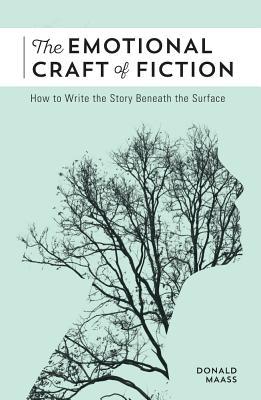
Engage Your Readers with Emotion
While writers might disagree over showing versus telling or plotting versus pantsing, none would argue If you want to write strong fiction, you must make your readers feel. The reader’s experience must be an emotional journey of its own, one as involving as your characters’ struggles, discoveries, and triumphs are for you.
That’s where The Emotional Craft of Fiction comes in. Veteran literary agent and expert fiction instructor Donald Maass shows you how to use story to provoke a visceral and emotional experience in readers. Topics covered
• emotional modes of writing
• beyond showing versus telling
• your story’s emotional world
• moral stakes
• connecting the inner and outer journeys
• plot as emotional opportunities
• invoking higher emotions, symbols, and emotional language
• cascading change
• story as emotional mirror
• positive spirit and magnanimous writing
• the hidden current that makes stories move
Readers can simply read a novel…or they can experience it. The Emotional Craft of Fiction shows you how to make that happen.
Chapter Three – The Emotional World
This chapter basically focuses on the emotional side of our world, that is how our surroundings and our experiences, the moments of our lives that hold the greatest impact and memory, are moments that are infused with this strong emotional memory.
We experience life as feelings. It’s funny then, that so much fiction is written to minimize feelings or leave them out altogether. It’s as if emotions are not a fit subject or writing about them is too simplistic. Even fiction that celebrates feelings, romance for instance, can sometimes work with only a limited and familiar emotional palette.
Pages 27-28
Or at least, this is what Maass says…and again, I’m finding myself wondering if we’re even seeing the same books at all. I’ve had numerous times in the Introduction and the three chapters that I’ve read, where I’ve completely and utterly disagreed with statements that Donald Maass has made.
I’m someone who gets invested in characters and has the experience of being a part of these other worlds through the characters. I laugh and cry and gasp and get excited or frustrated or a whole myriad of other emotional reactions while reading fiction. But based on the content of this book and the way he delivers said content, it seems as if Maass himself is extremely reserved and just doesn’t connect with characters, doesn’t really feel what’s being presented….and so I wonder if he is really qualified to give us this book. Sure, yes, he founded a literary agency in New York back in 1980, so you can’t deny that he’s been in the business for a long time, and I’m sure he has a dearth of knowledge…….but I honestly don’t feel like he was the best choice for a book on emotional craft, on creating an emotional story beneath the surface of your fiction.
The emotional experience of a story, both for characters and for readers, can be far richer than it often is. Authors would like that to be true, but how can that be achieved without bogging things down or boring readers with the obvious? When the mandate is to keep things visual, exciting, external, and changing, how are you supposed to spend page time on what is amorphous, internal, reflective and static? Emotions aren’t story.
Page 28
Sure, emotions aren’t the whole story, but they are a decently sized aspect of the story. And there are folks who can present the amorphous concept of emotions in a visual and exciting way. I’ve seen plenty of authors and plenty of books that don’t shy away from those internal reflective moments for the characters. If we can laud these stories that spend 5 pages describing the physical details and basic life story of a tree, then I think we can also handle a page or two that delve into how a character is feeling and what is going on inside.
Okay, so I was curious and checked…this book came out in 2016. So there is a little bit of dated feel of the commentary, but I’m sure if Maass felt there were practically no good books with an emotional crafting of story in them in 2016, he probably feels very similarly now.
Let’s get into what Maass says are methods to make us feel as we read.
First up: Me-Centered Narration.
In real life, we don’t just go up to people, say “Let’s talk about me!”, and then keep talking. We listen and ask questions, and then we expand on things, sometimes with our own experiences sprinkled in. Part of building friendships and relationships is being interested in the other person or people. Maass says it is almost the opposite with writers to readers, because readers open their hearts to characters whose hearts are already open. So characters need to talk quite a bit about what is going on and what they’re feeling.
In many manuscripts, the characters don’t disclose much. Often they, or rather their authors, simply report what’s happening to them–a dry, play-by-play conveyance of the action. Even the witty, ironically detached first-person voices of Young Adult, New Adult, and Para-Everything fiction aren’t necessarily open. An ironic, snarky, or perky tone can be used to avoid true intimacy with readers. Literary writing isn’t necessarily intimate, either. A life “closely observed” doesn’t mean we’ll care about it.
Page 29
I don’t know, Mr Maass, when reading your dry play-by-play about the supposed lack of disclosure and lack of emotion on the page, your obvious disdain for Young Adult, New Adult, and Paranormal fiction are quite clear to me. Just because you have issues parsing emotions from a conveyance of action doesn’t mean that all of us do. And since so many of us present ourselves to the world as ironic or snarky or perky, maybe we connect with and understand those characters because they are like us.
And this is what I’m not understanding…I just looked up the Donald Maass Literary Agency and they oversee Fantasy and Horror and Women’s Fiction and YA and Science Fiction and Thriller and Middle Grade and Literary Fiction….and there are some AMAZING authors and books attached to this agency.
So why am I having such a difficult time with Maass and this book on emotional craft?
Okay, back to Me-Centered Narration. Maass does recommend building the world of the story not by describing how it looks and feels and smells, but instead by giving us the characters’ experience of the world.
Creating a world that is emotionally involving for readers means raising questions and concerns about that world. It means both welcoming readers inside that world and making them curious, or uneasy, about where they are. First-person narration, the self-absorbed voice of our age, would seem to do that automatically but that belief is deceptive. True emotional engagement happens when a reader isn’t just enjoying a character’s patter but when she cannot avoid self-reflection, whether she’s aware of it happening or not.
Page 29
So how does this happen? Maass says that in real life we bounce off others or we pick up on the moods of others. It’s like joining in at singing or screaming at a concert, or going to a sports game and cheering or booing along with the rest of the crowd. And Maass says that it a similar effect to what happens in fiction.
In reading fiction we react to what others are feeling strongly, in this case the characters. Strong feelings are an invitation. Or a challenge. Strong feelings press us to judge what characters feel. We sympathize with them, or not. We engage on our own level.
Page 30
Pages 31-34 give us a couple of examples as well as Maass’s commentary around those excerpts from novels. I’m not going to share those here, because I don’t believe in sharing everything from the book. If the information you’re getting from this is useful to you, then you can find even more when you get a copy for yourself (whether you purchase it or borrow it from a library because those are both valid options).
And on Page 34, we are also given the Emotional Mastery 3 exercise, which is focused on Me-Centered Narration.
Next up, Maass talks about Emotional Scale.
He begins with asking the reader a question: what was the most emotional day of your life? Then he says that most answers probably revolve around birth, death, betrayal, trauma, marriage, divorce, miscarriage, failure, second chance, recovery, a dream achieved, a confession of love, getting a helping hand…but Maass says that those are events, and that the focus needs to be on the emotions that they evoke instead.
These strong emotions are the ones that writers want to evoke because it’s what you want the reader to feel. These are things like fear, rage, passion, triumph, hope, grief, joy, love. It’s not the more mild emotions like boredom, doubt, fondness, satisfaction, melancholy, gloom, caring, or apathy. Because the goal isn’t to evoke moderate feelings.
How could a story possibly provoke such feelings? It can’t. It’s not real.
And yet we do feel strongly, sometimes, when we’re reading fiction. Big feelings like dread, terror, joy, or love can be evoked in readers, but not by force. They are most effectively evoked by trickery. Stage magicians use misdirection to take their audiences by surprise. Emotional craft is similar. Artful fiction surprises readers with their own feelings.
Page 36
This is done by laying a foundation that the readers can build their own experiences on. This is done by utilizing small details as reminders used to evoke a situation that is preloaded with feeling. Details are great for suggestion, and suggestion can evoke feelings.
Pages 36-38 include another story excerpt with some of Maass’s commentary on what that snippet evokes. And then Page 38 also has the Emotional Mastery 4 exercise, which is Small Details Equal Big Emotions.
After that, Maass takes us to the other end of the emotional scale, and looks at small emotions. Unlike the previous discussion where we evoke big feelings with small details, here we want small emotions to have a big impact.
Maass says that you want to make the tiny emotional moments of the characters’ lives worth the readers’ time. Basically when a character struggles with feelings the reader basically becomes like a referee, and holds an inner debate, where they basically wonder and think on if they would feel that way too. That’s what you want.
Pages 40-41 again gives us an excerpt and some commentary, and then Pages 41-42 include the Emotional Mastery 5 exercise: Small Emotions Equal Large Experience.
This takes us to the next section, which is Stirring Higher Emotions.
Optimism, vision, dedication, high achievement, and leadership are not everyday qualities. Compassion, empathy, and understanding–even for an enemy–are rare. Gandhi, Martin Luther King Jr., and Mother Teresa are not common. However, we’re not talking about life; we’re talking about fiction. Why not create characters that inspire us to a high degree?
Page 42
Maass then says that it’s disappointing that he meets so many ordinary characters in manuscripts. Ordinary characters aren’t in the great classics, and they don’t need to be in your current novel.
Wait….ordinary characters aren’t in great classics? Were we reading the same “classic” novels, Mr Maass? Because a lot of them were ordinary, reflecting the time period and the lives of folks similar to them in reality. But even in their ordinary portrayal, there was something, an inner spark, that spoke to wanting something more, something different, and honestly, that is pretty ordinary too. We all feel like we want something more or want something to change.
Anyway, back on topic. Maass tells us about this effect in fiction, called moral elevation, something scientifically demonstrated by Dr Jonathan Haidt and others. This effect shows that reading about good people causes us to be better ourselves. Characters can inspire us to make better choices.
To that I would add that we also remember good acts more than bad ones. Betrayal and cruelty shock for a moment but fade from our minds. Sacrifice, heroism, selflessness, and grace endure in our hearts and become that to which we aspire. We remember. We emulate.
When we are moved and inspired by the actions of characters, what we feel are higher emotions. They are the timeless virtues entolled in every religion and recommended by every great thinker. Higher emotions make us ponder. They make us change. They make us better people. They also cause readers to rate those novels more highly, which isn’t bad either.
Page 43
Pages 44-48 again include excerpts and commentary, so I will once again skip over that. Except I will point out that Maass does give us a content/trigger warning for the excerpt on pages 46-48 talking about how it is dark and is not recommended if you are squeamish or opposed to vile acts.
Moral stands and struggles have emotional power, and it’s a rare story that could not generate such moments and achieve that power. All characters can rise above their own selfishness, for a moment, to become gracious, insightful, generous, or self-sacrificing.
We all shine at times, so why not your characters, too?
Page 48
Page 49 includes the Emotional Master 6 exercise: Good Deeds.
And…the final section for this chapter is Moral Stakes.
We tend to think of Western culture as a postmodern wasteland: amoral, materialistic, self-aggrandizing, and dogmatic. The truth is that we all yearn for a better world, one filled with compassion, respect, justice, opportunity, equality, and freedom. You can see this in politics. Conservatives and liberals both want a better world, even though they seek different toads to achieve it. You can see this in beliefs. Both followers of faith and rational scientists seek purity and truth. You can see this in cultures. People of all backgrounds value family, community, and shared customs. Human beings are good.
Page 49
I’m not going to get into a big ol’ rant on here about my thoughts on this paragraph, so I’m just going to move on.
What I will say is that next Maass talks about how it is important to signal to readers that a character is good, and it should happen early in the book. This is true whether your main character is a hero, an antihero, or a dark protagonist. How does he suggest doing this? Well, by using the Save the Cat screenwriting technique. And since I’ve already talked about this technique thanks to another book, I’ll link that chapter here and move on.
Pages 52-55 gives us more book excerpts and commentary, and the chapter ends on page 56 with Emotional Mastery 7 exercise: Moral Stakes.
Maass actually concludes the chapter by saying “Focus on the emotional world of your characters and you will not only make a better tale, but you will build a better world for us all.”
Well, that is all from me for today. Thank you so much for stopping by, and I’ll be back soon with more geeky content.

 Free State of Geek