
Hey all, Sam here.
Why yes, this weekend we get two Weekend Writer posts…which is something that seems to happen somewhat regularly, but that is totally okay. Some weekends you just need a little extra nudge in the writer portion of a creative life. I certainly know that I need a little extra push, a little more of a boost in the right direction. Between last minute changes in work schedule the past couple days, a full schedule change for next week, and actually being a bit busy at work, which leads to needing extra recovery time at home…I haven’t written the past couple of days…which sucks because it is Camp NaNoWriMo right now.
Hopefully I can get writing and get caught up on my word count. I should have a little bit of time to write Sunday night/all day Monday.
Anyway, today I’m diving into a book that I’ve had on my shelf for something around a year now. The premise of it seems extremely useful, and I’m hoping I’ll be able to get a lot from it. But we’ll see. After the first few chapters, I should have an idea on whether this is going to be a two-month deep dive breakdown, or if it will just be a couple posts general overview. Because, sadly, I do not really read ahead with these creative writing books, so I pick up the book and read the self-scheduled chapter(s) the day of or the day before I write the post up.
All right, let’s get started.
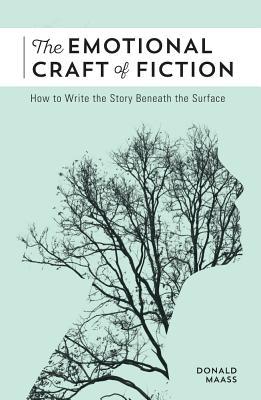
Engage Your Readers with Emotion
While writers might disagree over showing versus telling or plotting versus pantsing, none would argue If you want to write strong fiction, you must make your readers feel. The reader’s experience must be an emotional journey of its own, one as involving as your characters’ struggles, discoveries, and triumphs are for you.
That’s where The Emotional Craft of Fiction comes in. Veteran literary agent and expert fiction instructor Donald Maass shows you how to use story to provoke a visceral and emotional experience in readers. Topics covered
• emotional modes of writing
• beyond showing versus telling
• your story’s emotional world
• moral stakes
• connecting the inner and outer journeys
• plot as emotional opportunities
• invoking higher emotions, symbols, and emotional language
• cascading change
• story as emotional mirror
• positive spirit and magnanimous writing
• the hidden current that makes stories move
Readers can simply read a novel…or they can experience it. The Emotional Craft of Fiction shows you how to make that happen.
Chapter One: The Emotional Craft of Fiction
Maass opens this chapter and this book discussing how the world of writing is very much that of opposites, whether the writing intent is commercial or literary, planning or pantsing, leaning into the idea of genre or hating the labeling of genre, whether it’s about money, prestige, creative expression, or a pit stop on the path to movie options.
A dichotomy less often discussed is the division between those who are comfortable writing emotions and those who find putting emotions on the page repellent. The latter group values showing. To get a reader to feel what a character feels, the thinking goes, put the reader through a character’s experience. Provoke emotions in readers; don’t spoon-feed them feelings. Most valuable of all to this group is the capturing of moments. These are passages so honest, vivid, and true that they transcend mere words. Readers recognize the universal human condition.
For other writers, telling is a positive. They go inside the mind and heart of a character to observe and feel story events just as that character does. Writing out characters’ emotions is the essence of intimate storytelling. How else can you bring a character fully alive? For these authors, the highest expression of the art are passages of extended telling, in which a characters’s inward condition is captured in nuanced detail by means of words alone.
pages 1-2
We all know showing versus telling. It is brought up in pretty much every writing lecture or class or discussion. So I’m not going to spend time talking about that right here or now. What I’m hoping this goes into is how to use a blend of showing and telling to get to the emotion of it all.
And…if it isn’t clear by now, often times I write these posts as I’m working my way through the chapter(s), so sometimes I might say something that does get answered later in the post.
The most useful question is not how can I get across what the characters are going through? The better question is how can I get readers to go on emotional journeys of their own?
Page 2
I know when it comes to my books, I am wondering how I can write thoughts and actions and experiences in a way that resonates with both the characters and the readers, so I’m hopeful that this book will help with that. It’s not a super long book, just over 200 pages. But length isn’t always an indication of how useful or good a book is. I’ve read some absolutely incredible shorter reads.
On page 3, Maass points out that why it is important to look at fiction writing through the lens of emotional experience is because that is the way that readers read. It isn’t so much that they are reading, but responding to what you write. Simply by reading your work, their outlook or outrage doesn’t become yours, but the do form their own in response to what your words evoke emotionally in them.
From here Maass goes on to talk about how few books seem to reach that emotional impact for him, and he asks us the reader to think of how many novels have truly moved us, have brought us to tears or rage or feeling that we’re going to live differently, how many stories have marked you in a way that you’ll never forget? Then he goes on to suspect that the number is small and that the choices won’t be current novels but instead will be classics.
I absolutely, whole-heartedly disagree with this statement of belief from Maass. The reason some classics sit with me is sadly because some circumstances just haven’t changed in the 100-200+ years, but they also sit with me because we so often have to read and discuss and break down these novels or stories over and over in different English/Literature courses over our lives.
And I could think of a good number of modern novellas and novels that have brought me to tears or changed my life. If anyone would like to know about those books, I’d be happy to pull together a blog post detailing books that have impacted me over my reading life. Just let me know.
Emotional impact is not an extra. It’s as fundamental to a novel’s purpose and structure as its plot. The emotional craft of fiction underlies the creation of character arcs, plot turns, beginnings, midpoints, endings, and strong scenes. It is the basis of voice.
The emotional craft of fiction can also unlock the power of writing personally, reconnecting you to your story during those chaotic times when your novel falls to pieces and your sense of fun is gone. Emotional craft isn’t a repackaging of old writing bromides. It’s a way of understanding what causes emotional impact on readers and deliberately using those methods. It’s a way to energize your writing with tools that are always available: your own feelings.
Page 4
I can agree with this. I enjoy good plots and worldbuilding, but as long as I connect with the characters and their journey, I can go through a story, even if the rest is lacking. And a lot of that has to do with having an emotional response/connection to the characters. I’m even willing to look over some technical spelling/grammar/writing style issues if the characterization is good.
Chapter Two: Inner Versus Outer
In this chapter, Maass says that there are three primary modes or paths to creating emotional responses in readers. These are: Inner, Outer, and Other. He opens the chapter with a brief introduction to each, but since there is a breakdown of them after the four paragraph intro, I’m just going to hold off on saying more about them until we actually delve into them during the chapter.
Outer Mode: Showing
The choice between inner and outer modes is a central one. Some story types, such as romance fiction, necessarily rely on inner mode. Others, like trillers, either havke not time to dwell on characters’ feelings or their authors regard such passages as artless and possibly repellent.
Writers of women’s fiction are caught in the middle. Given this story type and its audience, you’d think this wouldn’t be much of an issue. In women’s fiction it’s the inner experience of characters that we want to read, right? Changes and growth are the story. A journey of transformation is mostly taken inside, so inner mode would seem to be the default mode of choice.
On the other hand, women’s fiction writers usually hope to do more than entertain. Their fiction may be warm, fun, and loaded with chocolate and recipes, but it’s also serious. It has something to say. It ought to be well written, for how else will you win starred reviews and hope to raise questions for book clubs to discuss? Such artfullness requires showing.
Page 7
In this chapter, Maass also gives us examples of passages from a few different stories, going over how sometimes even just showing what is going on and how the character is acting and reacting, even without probing into their inner thoughts and feelings, can evoke an emotional response in the reader, even if that response is different from how the character is feeling.
To put it simply, when character emotions are highly painful, pull back
One secret ingredient behind effective showing can be summed up in this word: subtext. When there’s a feeling we’re not being told, but it is evident anyway, that underlying feeling is the subtext. It’s the unspoken emotional truth. When we discern it, it’s a surprise.
Page 10
I guess I didn’t even think about how it’s possible to go too far into emotion within a story. I guess I’m so used to there being a little distance or a little dulling of things so it doesn’t overwhelm. Then again, we are also used to the main characters within books being made of stronger stuff than we perceive ourselves or other people around us.
Showing isn’t necessarily limited to external action or dialogue, or that which we can see or hear. Situations and conditions such as a state of being can be presented without emotions and, despite that, cause us to feel quite a bit.
Page 12
There are several more examples from different novels, but you’ll have to read this book to get all of those.
Maass also gives us an inserted block in this section that is titled “Emotional Master 1: Effective Showing.” It includes an exercise into using what we’ve been shown in the writing examples and trying it with your own story. This block is on Page 16, but I’m not going to get into the details here, because while I like doing these deep dives, I don’t want to give away all the secrets of the books, just show off enough to provide context and inspiration. If you want the rest of the information, you’ll need to get the book for yourself.
Inner Mode: Telling
Writing out what characters feel ought to be a shortcut to getting readers to feel that stuff too, shouldn’t it? You’d think so. After all, it’s through characters that we experience a story. Their experience is ours. Actually, the truth is the opposite. Put on the page what a character feels and there’s a pretty good chance that, paradoxically, what the reader will feel is nothing.
Pages 17-18
Again, another interesting point. There is an art to writing out what characters feel in a way that the reader will still feel something, even if it isn’t exactly what the character is experiencing. I mean, I don’t know how many times I’ve been reading the banter between two characters in a romance, and the characters are butting heads because at the time they don’t like each other, and I’m just reading with a big grin on my face, because I can see the sparks flying and the chemistry heating up between them. They’re annoyed, but I’m amused.
Human beings are complex.[…]Our feelings are also communal. We pick up on others. We can project feelings that are mean, selfish, and destructive onto others. We can reserve feelings that are noble, selfless, and bold for ourselves. We laugh at funerals and cry at weddings.
We’re clear. We’re vague. We hate. We love.[…] Our feelings are also dynamic. They change. They can reverse in an instant.
Pages 18-19
Again, Maass provides examples from novels, and again, I will leave those as something to read if you should pick up this book yourself.
On Pages 22-23, we are given the Emotional Mastery 2: Third-Level Emotions inserted block, again with an exercise for you to use for your own writing.
Other Mode
This third method basically becomes sort of a conversation between writer and reader, bypassing the characters entirely since the emotional experience of the reader is not the same as the emotional experience of the character. The Other Mode is not the showing or the telling, but the other things on the page that provoke readers.
Each reader reads under the influence of their own personally held beliefs and biases, likes and dislikes, history and feelings, peeves and current temperament.
Readers want a positive type of experience from their reading, and that is more than just getting a happy ending. It means affirmation, the satisfaction of things turning out the way the reader thinks they should. It means validating their beliefs and morals. But authors also want to challenge readers, and thankfully there are readers out there who wish to be challenged too.
Creating an experience for readers is more than just walking them through the plot. It means giving them something to think on, something that intrigues them, something that excites them, something that surprises them.
Other mode is not a single technique or principle. It is a vast array of elements tuned like the instruments in an orchestra to create a soaring emotional effect. When all the instruments work together, they lift our hearts. They transport us to a realm of wonder. We are open.
Page 26
According to Maass, achieving a strong emotional impact is the goal of the rest of this book, and the answers on how to do it are in the rest of these pages.
All right, that is all from me for today. Thank you so much for stopping by, and I’ll be back soon with more geeky content.

 Free State of Geek
1 thought on “Weekend Writer: The Emotional Craft of Fiction by Donald Maass Chapters One and Two”